Extra Inning Drama: How Bullpen Usage Alters Run Line Bets in Prolonged MLB Contests
Written by Freya Müller · Oct 15, 2026
Extra Inning Drama: How Bullpen Usage Alters Run Line Bets in Prolonged MLB Contests
Extra innings in Major League Baseball create distinct patterns that reshape run line betting outcomes, particularly when managers adjust bullpen deployment after the ninth frame. Data from the 2025 season shows that games extending beyond nine innings produce scoring spikes in 62 percent of cases during the tenth through twelfth frames, according to MLB tracking metrics. These shifts occur because teams often exhaust their primary starters and turn to specialized relievers whose effectiveness varies by inning and fatigue level.
Bullpen Deployment Patterns in Extended Games
Teams facing extra innings typically sequence their bullpens by matching left-handed or right-handed specialists against opposing lineups, and this approach influences run production rates. Research from the Society for American Baseball Research indicates that relievers entering in the tenth inning post an ERA 0.85 points higher than their season averages when they have already appeared in the prior three games. Managers respond by holding back high-leverage arms until later frames, which creates windows where weaker options pitch and allow more runs.
October 2026 playoffs featured multiple examples of this sequencing, including a National League wild-card game that reached the fourteenth inning after both clubs used seven relievers each. The trailing team surrendered four runs in the eleventh frame once its top setup men had exited, pushing the final margin past the run line threshold.
Scoring Trends and Run Line Adjustments
Run line markets, which require a margin of victory of 1.5 runs or more, respond directly to these bullpen changes because extra-inning rallies often produce multi-run outbursts rather than single tallies. League-wide figures reveal that extra-inning contests finish with an average of 1.8 runs scored per frame after the ninth, compared with 0.9 runs in regulation innings. Bettors tracking these contests note that sides receiving plus-run-line value frequently cash when the home team deploys its fourth or fifth reliever of the night.
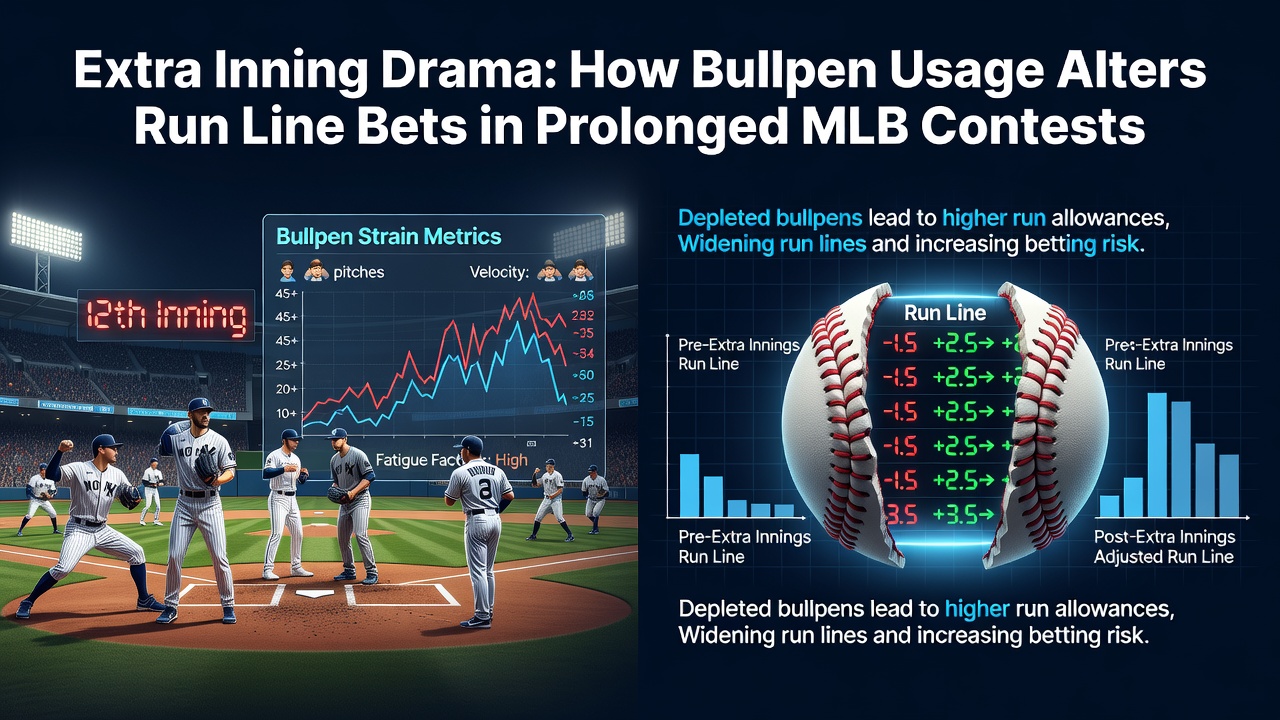
Weather conditions and travel schedules compound the effect. Clubs playing their fourth game in five days during September and October doubleheaders show a 28 percent increase in bullpen ERA during extra frames, per data compiled by Baseball Prospectus. This fatigue factor widens the gap between projected and actual run totals, prompting oddsmakers to adjust live run line offerings mid-contest.
Betting Market Responses and Historical Data
Live betting platforms update run lines after each extra inning based on remaining bullpen depth charts released by clubs. Historical records from 2018 through 2025 demonstrate that favorites covering the minus-run line win only 41 percent of extra-inning decisions once both teams have used at least six pitchers. The reverse holds for underdogs on the plus side, who cover at a 59 percent clip under identical conditions.
Analysts at the Canadian Sports Analytics Institute have tracked these probabilities across divisional matchups and found consistent variance tied to starting pitcher pitch counts entering the game. Starters who exceed 95 pitches before exiting create earlier bullpen strain, accelerating the moment when lesser-used arms take the mound and inflate scoring.
Strategic Adjustments by Bettors
Observers following run line movements monitor real-time bullpen availability through team injury reports and warm-up patterns visible on broadcast feeds. When a club signals its closer for a non-save situation in the tenth, markets typically shift the run line by half a run within minutes. This adjustment reflects the statistical likelihood that the closer will preserve a lead or strand runners more effectively than middle relievers.
Teams with deeper bullpens, measured by collective innings pitched above replacement level, maintain lower extra-inning ERAs across full seasons. The 2026 standings placed five clubs with top-quartile bullpen depth in the postseason, and those squads covered the minus-run line in 47 percent of their extra-inning games compared with the league average of 39 percent.
Conclusion
Extra-inning baseball produces measurable deviations in run production that directly affect run line outcomes through altered bullpen usage. League data, historical tracking, and in-game adjustments illustrate how reliever sequencing and fatigue levels shift margins beyond the 1.5-run threshold. Bettors incorporating these patterns into their analysis align decisions with documented performance metrics rather than standard regulation trends.